• Skip to main content

Sustainable Copper

Water Recycled and Reused

Futuresmart Mining™ at Anglo American’s Quellaveco Mine: Smart, Safe and Sustainable

May 1, 2021 by

At Quellaveco, Anglo American is building a larger mine with a smaller footprint. Quellaveco, translated as “Ash Mountain,” is a new, world-class mine near the town of Moquegua in Peru. With a confirmed mine life of 30 years and containing an estimated 7.5 million tonnes of copper, Quellaveco is a significant find. Anglo American is using this unique opportunity to demonstrate FutureSmart Mining™, a technology-driven sustainable mining blueprint leading the way for responsible mining of the future.

FutureSmart Mining is a groundbreaking approach to technology, digitalization and sustainability for mining operations. By limiting the use of water, energy and capital spending and increasing support to communities, the initiative will make Anglo American’s Quellaveco project one of the most efficient and responsible in the world, without sacrificing productivity. When the mine begins operations in 2022, Quellaveco will have the capacity to deliver enough copper to supply 90 million electric vehicles or 80 million homes.

This $5.3 billion project, owned in part by the Mitsubishi Corporation, will increase the company’s copper production by 20 percent in 2023, generating 330,000 tonnes of copper annually. With the addition of Quellaveco, Anglo American will become the world’s fifth-largest producer of the red metal.

MINING WITH MOTHER NATURE: FUTURESMART MINING IN ACTION

FutureSmart Mining™, at its absolute essence, is about footprint; how do you change the footprint of mining? How do you have a mine that draws no fresh water? Mines without tailings dams?”- Tonney O’Neill, Technical Director, Anglo America

The Challenge Facing Sustainable Mining

Because drought is a constant consideration in Peru, Quellaveco’s open pit mine faces special challenges. The Asana River, where the ore is located, supplies water to Moquegua and nearby regions. However, the mine will require 22 million cubic meters (m3) of water annually to operate when production begins in 2022—at an estimated rate of 0.41m3 of water for each tonne of ore.

Quellaveco’s Innovative Water Solution

To reduce its environmental and societal footprint, Anglo American has invested $20 million to reroute the Asana River to preserve its function as a freshwater source for the surrounding area. Technicians constructed a dam and a 7.5-kilometer (4.6-mile) tunnel through a mountain to rejoin the river with its original course on the other side of the mine, ensuring the river’s continued protection and access for surrounding communities.

In addition, Anglo American established two new water sources for future operations, requiring no water from the Asana River once operations begin. First, Anglo American will use approximately 18 million m3 of water from the Titire River in Peru’s High Mountain region, which contains natural arsenic and boron due to its volcanic origins, making the water unsafe for agriculture and human consumption.

Second, Anglo American will provide additional water to local communities by building a dam and reservoir in Vizcachas to collect excess rainwater. This reservoir will hold 60 million m3 of water and distribute 28 million m3 of water annually. Anglo American plans to use only 4 million m3 of water from this source and contribute 24 million m3 of water to the surrounding region.

SMARTER TECH FOR A SMARTER WORLD

Moving Mountains with Electricity

The Asana River has already done much of the heavy lifting by removing a substantial amount of waste, rock and soil in the riverbed, reducing the barrier to extraction. The resulting low strip ratio reduces Anglo American’s environmental footprint and increases its production efficiency.

To further increase sustainability, Quellaveco will use energy-efficient electric vehicles to power its process. Technicians will deploy automation-ready equipment, including blast drills and 30 specialized electric mining trucks, the largest Anglo American fleet to date. Cat® dealer Ferreyros’ Caterpillar 291t 794AC mining trucks utilize an electric-drive powertrain to deliver a 327-tonne payload.

High-capacity electric rope shovels and hydraulic mining shovels will load the trucks, further increasing production rates and lowering energy costs. Anglo American selected the Cat 7495 Electric Rope Shovels, the largest mining equipment in Peru. These rope shovels weigh a staggering 1,390 tonnes, the equivalent of 630 light trucks, and can transport up to 127,000 tonnes per day. Quellaveco will also utilize the first Cat 6060 Hydraulic Mining Shovel in Peru, which features a 67-tonne bucket payload.

Innovation is a central tenet of Anglo American’s work. Anglo American is exploring whether Quellaveco could utilize Coarse Particle Recovery (CPR) technology. The technology’s benefits are twofold: 1) CPR allows the mine to float coarser ore particles (2.5 times larger in size), reducing the energy needed to grind the ore to extract the copper, and 2) it drains and reuses the water from the process, allowing waste to be extracted as dry, stackable tailings. This energy-saving technique deployed at Anglo American’s El Soldado mine in Chile achieves an 85 percent water recovery, a 30 percent boost in savings, a 30 percent reduction in energy use and a 20 percent increase in production rates.

A Future for Quellaveco

Whether through its applications in wind turbines, solar panels or electric vehicles, copper is essential to renewable energy. Quellaveco embodies Anglo American’s FutureSmart Mining blueprint by providing a model for responsible mining that will continue sustainable practices, respect the local environment and increase productivity for generations to come.

About Anglo American

Anglo American plc is a diversified multinational mining firm based in London, the United Kingdom and Johannesburg, South Africa, and is a major copper producer with four copper mines in Chile.

About Anglo American Quellaveco S.A.

Quellaveco, which lies in Peru’s southern Moquegua region 3,500 miles above sea level, is a 60-40 percent Joint Venture (JV) between Anglo American and Japan-based Mitsubishi Corp. The Anglo-operated project in the Andes Mountains of southern Peru will utilize open pit mining and flotation processing to produce copper concentrate, along with molybdenum and silver by-products. The operation will yield 300,000 tonnes of copper annually with first copper pending 2022.

About Mitsubishi Corp.

Mitsubishi Corp. is a global conglomerate which develops and operates across industries including energy, metals, machinery, chemicals, foods, finance and environmental business. Headquartered in Tokyo, Mitsubishi’s activities range from resource development to investment in retail business, infrastructure, financial products, and manufacturing of industrial goods.

About the Copper Alliance®

The Copper Alliance is a network of regional copper centers and their industry-leading members. It is responsible for guiding policy and strategy and for funding international initiatives and promotional activities. Headquartered in Washington, D.C., the organization has offices in three primary regions: Europe, Asia, and North America. The Copper Alliance has partnerships and programs in more than 100 countries.
Closing the Loop for the Circular Economy

November 28, 2018 by

Top Miners Work Toward a Sustainable Future by Recycling Copper

The Cycle of Life

Recycling metals in an age defined by growth is integral to the UN Sustainable Development Goals (SDGs) and vital to sustaining the planet as we know it. Moreover, an exploding global middle class, coupled with new electrification for one-billion people worldwide and the proliferation of consumer electronics, are driving the necessary transition to a low-carbon future.

Indeed, growing consumption—fueled by shorter life cycles for an increasing number of electronic goods—and production mean the availability of raw materials needs to expand at a quicker rate. Fortunately, copper proves an ideal raw material for recycling as it is infinitely reusable without any loss of properties.

While recycling intricate electronic devices and other increasingly complex technologies poses distinct challenges, the world’s leading copper miners and pioneering members of the International Copper Association are more than up to the task.

Kennecott: In with the Old

Take Rio Tinto Kennecott and its flagship Bingham Canyon Mine, by far one of the world’s largest and most prolific projects. The mine, which first began operations in the early 1900s, now satisfies nearly 15 percent of all U.S. copper demands.

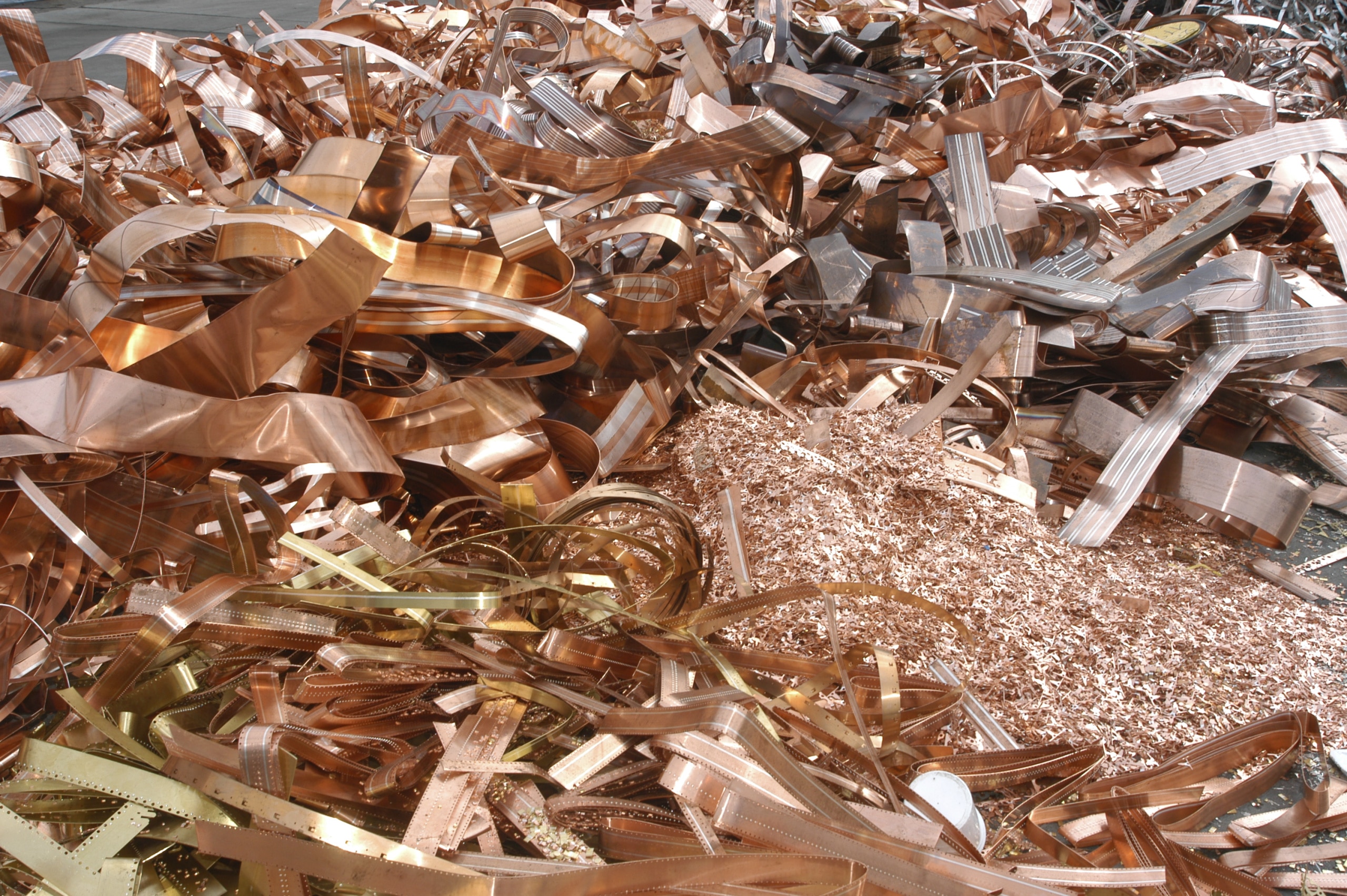
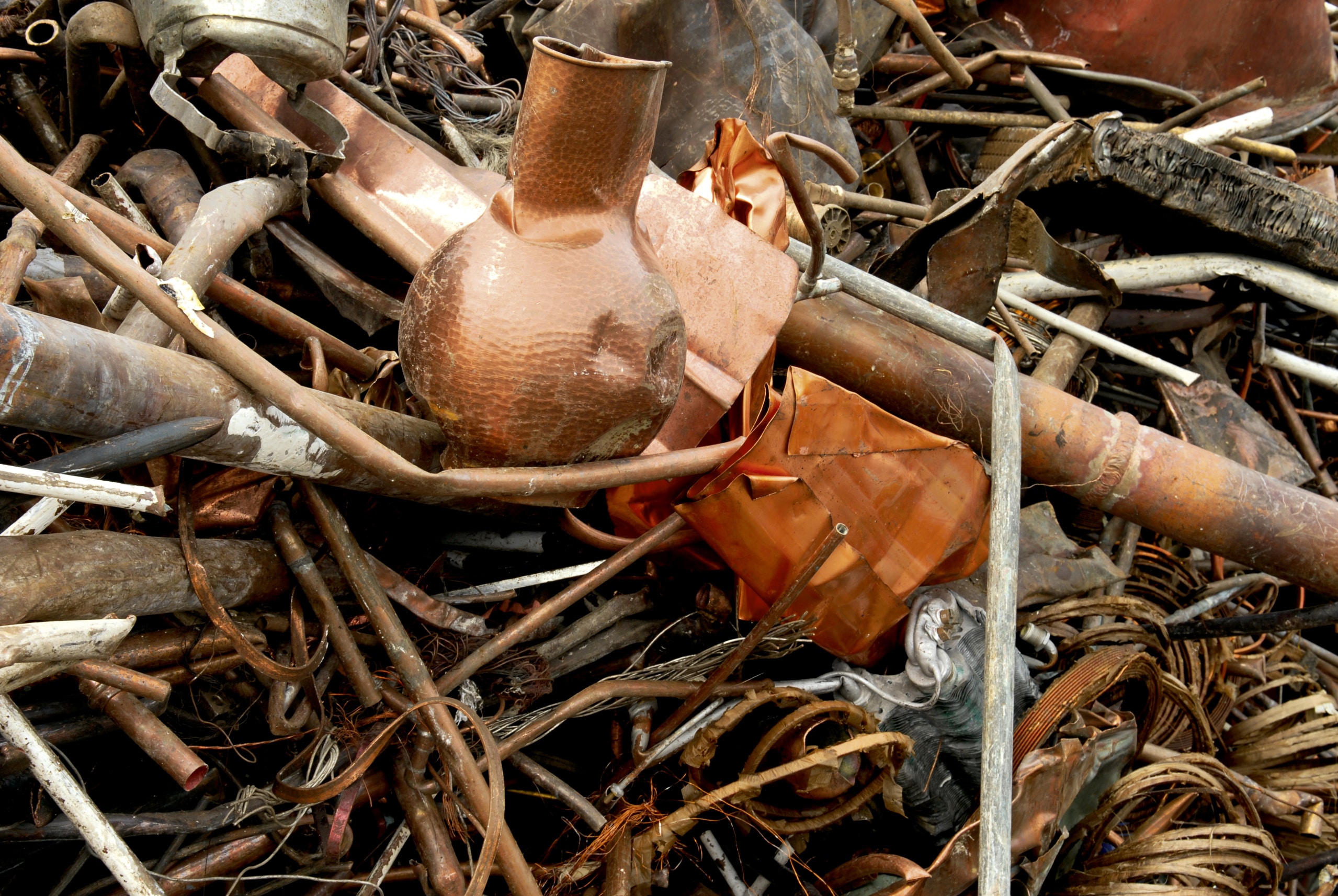
In 2012, to enhance efficiencies and advance the circular economy, Rio Tinto Kennecott and its assets began introducing recycled scrap metals—such as old copper wiring—from companies across the U.S into the smelting process.

Recycling copper is a win-win for us and for the community. It allows us to meet an element of copper demand in a sustainable way and to continue contributing to our local and national economy.” – Marc Cameron, Rio Tinto Kennecott Managing Director

Processed at the same smelter and refinery as the copper extracted from the Bingham Canyon Mine, the metrics are impressive. The process subjects 750-pound copper anode plates to an electric current for ten days to yield two 300-pound copper cathodes that are 99.99 percent pure copper.

In all, Kennecott processed 2.8 million pounds of copper from recycled scrap in 2017, a quantity equal to all electrical copper wiring in 6,400 newly constructed homes.

Photos provided by Aurubis

Boliden and the European Equation

ICA members with European assets are faced with the prospect that, while the continent has high copper demands, it also has limited mineral resources. In Northern Sweden, nearly 5,000 miles away from Utah, Boliden has been steadily recycling waste at its Rönnskär smelter since the 1960s.

The refinery, outside Skellefteå, has an annual capacity for recycling electrical material of 120,000 tonnes—including circuit boards from computers and mobile phones sourced principally from Europe—making it one of the world’s largest recyclers of metal from electronic material.

Increased recycling brings us closer to the circular economy, where a high degree of the material that is consumed can be reused or recycled, and that which is waste for one company is a raw material for another.” – Peter Burman, Program Manager, Mine Automation

After the removal of materials including plastic, iron and aluminum, the copper goes into a Kaldo furnace, which contains a rotational cylinder to guarantee even heat distribution during smelting. The result—called “black copper”—is then reintroduced for further refining to extract copper and precious metals.

Minimization of environmental impacts is essential, and since 2015, emissions and water discharge have been reduced by over 50 percent. The smelter is equipped with advanced systems to clean process gases and discharge water. Wet gas purification uses water to wash out dust particles; a subsequent refining process, meanwhile, further includes a mercury-specific purification.

Plastic in the electronic material melts during smelting, which acts as a source of energy and generates steam that is converted into electricity or heating. The heat is partially reused as district heating in the plant area, and the remaining heat supplies the local municipal heating system.

Aurubis: The Pinnacle of Copper Recycling

As the world’s largest recycler of copper and one of its largest metal recyclers overall, Germany’s Aurubis is expanding its own arsenal of cutting-edge technologies while making products from recycled materials at several of its sites. In addition to copper-alloy scrap, the firm also recycles copper-bearing residues from foundries and semis fabricators, shredder materials, galvanic slimes, slags, ashes and filter dust.

Central to operations is the largest plant at Aurubis’ recycling center in Lünen, Germany, where it develops cathodes from secondary raw materials. Meanwhile, Aurubis’ facilities in Hamburg process a mix of copper concentrates and recycling materials in the primary smelting process, whereas its plants in Belgium and Bulgaria primarily draw on scrap.

The end results generate copper tube, electronic scrap and casting slags, among others. Aurubis procures copper and copper-alloy scrap as well as copper-bearing residues. It utilizes scrap as input in the convertors and anode furnaces of its primary and secondary smelting processes and alloy scrap and residues in its Kayser Recycling System (KRS).

A Centrifugal Force in Germany

The KRS encompasses a submerged furnace almost 13 meters high, featuring a submerged combustion lance that is, in turn, immersed into the furnace from above. The charging times for this furnace are shorter because heating oil and oxygen are supplied, ensuring the iron silicate sand extracted contains a minimal amount of copper residue.

Byproducts—lead, bismuth, antimony and tellurium—are separated in the connected lead refinery and sold as concentrates. Precious metals, meanwhile, are fortified in a rich lead, with a precious metal content of approximately 70 percent.

About Rio Tinto Kennecott

Rio Tinto Kennecott is a fully integrated mining operation just outside Salt Lake City, Utah, U.S., and a fully-owned unit of Rio Tinto. For more than 110 years, Kennecott has been mining and processing minerals from the rich ore body of the Bingham Canyon Mine. In addition to Bingham Canyon, the subsidiary possesses other facilities at South Jordan in the Salt Lake Valley.

About Boliden AB

Boliden mines and processes base metals and precious metals, principally zinc, copper, lead, nickel, gold and silver. Headquartered in Stockholm, Boliden is also a leading global operator in the recycling of electronics and lead from batteries.

About Aurubis AG

Aurubis is one of Europe’s largest copper producers, a service provider for the automotive supply, chemical and waste-management industries, and the largest global copper recycler. With corporate offices in Hamburg, Germany, Aurubis produces over one million tonnes of copper cathodes annually along with various other copper products.

About the Copper Alliance®

The Copper Alliance® is a network of regional copper centers and their industry-leading members. It is responsible for guiding policy and strategy and for funding international initiatives and promotional activities. Headquartered in Washington, D.C., the organization has offices in four primary regions: Europe and Africa, Asia, Latin America and North America. Copper Alliance programs and initiatives are executed in more than 60 countries through regional offices and country-level copper promotion centers.

Anglo American Scales Sustainability Commitments

August 30, 2018 by

Global Outperformer Pioneers New CSR Strategy

Leadership, Environment, Thriving Communities, Trust
Anglo American has rolled out an innovative strategy to foster energy efficiency, reduce greenhouse gas emissions (GHGs), enhance smart water use and create value spanning its global footprint. Through this new strategy officials are accelerating—and better communicating—cross-operational improvements in key sustainability areas that systematically augment each other.

This blueprint has been systematically formulated to scale sustainability while embedding trust and transparency among all–stakeholders and stakeholder groups.

Following robust internal and external consultations as well as risk and opportunity-based analyses, Anglo outlined three strategic pillars, “Trusted Corporate Leader, Thriving Communities, Healthy Environment.” All further principles driving Anglo’s existing FutureSmart Mining™ blueprint. Integral, too, is the miner’s commitment to the UN Sustainable Development Goals (SDGs).

Scaling Resilience
Given ore depletion and growing market demands, miners are working harder to discover copper in remote corners of the world. Miners must address the sustainability of operations carefully and systematically: failure to do so can result in problems for the environment, communities and broader regions. These issues are mission critical—given “pit-to-port” industrial infrastructure, from the mines and associated facilities to roads, highways and railways to deep water ports.

“If Anglo American is to play its part in creating a sustainable future for the world and improving the lives of all of us, we must be prepared to challenge our business and ourselves, by re-imagining mining.”

– Mark Cutifani, Anglo American CEO

Beyond “Business as Usual”
Yet opportunities are vast, and Anglo is on the cutting edge of a drive to reinvent the copper mining industry itself.

Specific targets encompass reducing greenhouse gas emissions (GHGs) 30 percent, enhancing energy efficiencies 30 percent and slashing freshwater abstraction rates by 50 percent in water-scarce regions—a major concern to copper miners the world over.

In 2017, GHG emission reductions totaled 4.8 million tonnes—a full 21 percent reduction below initial forecasts. GHG emission-reduction targets for 2020, meanwhile, were 22 percent against projected emissions under “Business as Usual” (BAU) predictions.

Moreover, Anglo accomplished a 6 percent energy savings relative to BAU scenarios. In total, 320 energy-efficiency and business-improvement projects conserved 6.4 million gigajoules (GJ) in energy consumption throughout last year.

In the long term, Anglo aims to build a fully carbon-neutral, 100 percent green-powered mine. It is a multi-dimensional approach yielding remarkable returns. With help from a holistic climate-smart procurement focus—also intrinsic to the new strategy—full GJ annual consumption dropped to 97 million GJ from 105 million since 2016.

Walking on Water
Environmental and biotic impacts are important across jurisdictions for leading copper miners. For Anglo officials, water conservation is a major focus. In 2017, most notably, half of all the copper miner’s sites were water-stressed—pending global forecasts of a water shortfall of 40 percent by 2030.

“Delivering on these commitments will transform the way Anglo American does business.”

– Mark Cutifani, Anglo American CEO

Anglo is simultaneously pursuing 2020 freshwater reduction targets of 20 percent—contrasting with BAU—while moving toward recycling 75 percent of all water used at its mines. Other water-friendly measures target ore crushing and grinding, which will enable a re-use of 80 percent of process water. In the future Anglo plans an eventual move toward a 100 percent waterless mine.

These are among myriad examples of how Anglo’s sustainable energy and water priority strategies are interrelated. Its environmental conservation and sustainable development for local communities—including job creation and educational opportunities—as well as regional economies are a source of inspiration to miners across the globe.

About the Copper Alliance®
The Copper Alliance® is a network of regional copper centers and their industry-leading members. It is responsible for guiding policy and strategy and for funding international initiatives and promotional activities. Headquartered in Washington, D.C., the organization has offices in four primary regions: Europe and Africa, Asia, Latin America and North America. Copper Alliance programs and initiatives are executed in more than 60 countries through its regional offices and country-level copper promotion centers.

About Anglo American
Anglo American plc is a diversified multinational mining firm based in Johannesburg, South Africa and London, United Kingdom, and is a major copper producer with four red metal mines in Chile.

About FutureSmart Mining™
Enabled by robust, cross-operational and stakeholder consultations, Anglo methodology is embedded in its FutureSmart Mining™ initiative, which applies cutting-edge technology and broad innovative thinking. This encompasses collaboration to ensure safer, more efficient and more sustainable mining while accommodating the needs of each host community.

Scaling Sustainability through Desalinization

June 1, 2018 by

BHP’s New Water Treatment Plant at Minera Escondida Makes Mining History

The Challenge

From cooling and dust suppression to beneficiation (the treatment of raw material to improve physical or chemical properties especially in preparation for smelting) and concentration, sustainable water use is essential to copper miners as market demands grow while ore bodies decline at projects across the industry. Water impacts, real or imagined, can generate conflicts with communities and environmental groups. Disputes may escalate into civil unrest and lead to harsh regulations and incalculable financial losses. Current flashpoints span mining jurisdictions worldwide.

Smart water use is also a pillar of the United Nations-led Sustainable Development Goals (SDGs) and core to the strategy of the Copper Alliance® and its members, including BHP that aims to eliminate all freshwater use in Chile by 2030. Amid some of the planet’s highest altitudes and driest geographies—and most prolific red metal mines—this is no small feat.

The Journey

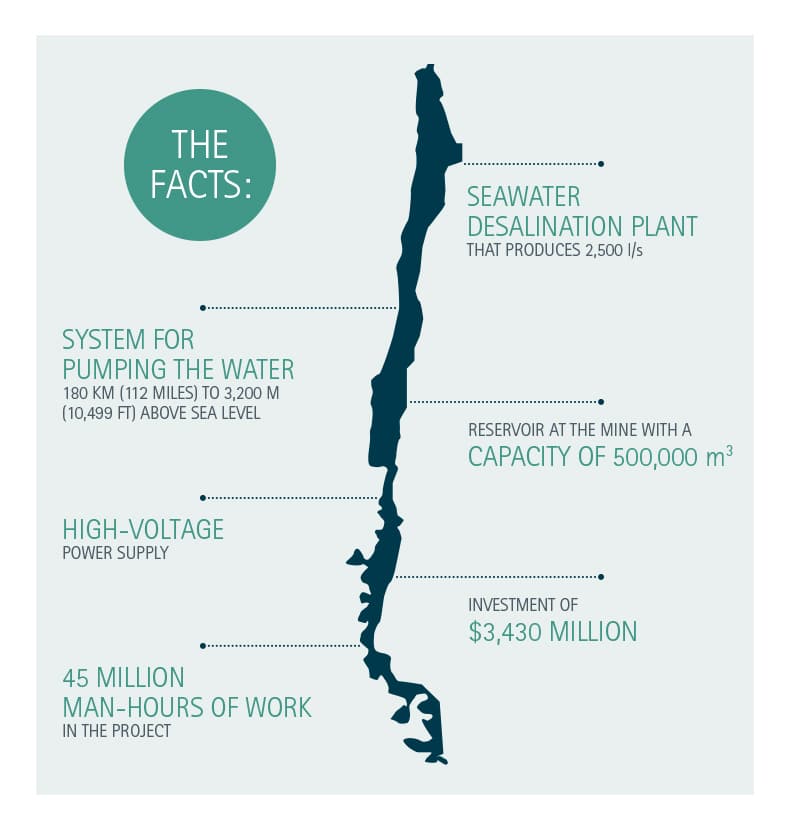
Last month, BHP took a giant leap forward with the inauguration of the Minera Escondida mine’s second seawater desalinization plant (EWS), making history in the process. The installation, with its 2,500 l/s processing capacity, is the largest such facility in the Southern Hemisphere.

The new installation, complementing Escondida’s existing 525-l/s plant that has been running since 2006, is the legacy of a pioneering journey. Construction began in 2013 and represents the culmination of an investment of $3.4 billion, 45 million employee hours and untold ingenuity. Additionally, it represents a major milestone as the world’s top miner seeks to reduce aquifer dependence across its operations.

The Logistics

High in the Andes mountains, the logistical prowess behind the EWS is as extreme as the desert surrounding it, which is one of the planet’s highest locations—barely receiving a millimeter of rainfall in any given year.

Since the desalination plant lies at sea level, crews constructed four high-pressure

pumping stations and two one meter (42 inch) pipelines to transport the process water from Puerto Coloso to Minera Escondida’s installations 180 km (112 miles) away, and 3,200 meters (10,499 feet) above sea level. With nine high-pressure pumps, each station comprises a 4,000 m3 transfer tank. A reservoir with a 500,000 m3 capacity also was built at the mine, guaranteeing an uninterrupted supply of water.

The Technology

The EWS brings innovation to all three phases of the project cycle. First, seawater is withdrawn by a system deploying two tunnels, boasting a full capacity of 8,000 l/s. Three self-cleaning screens effectively remove any specific impurity exceeding 3 mm.

“This plant reflects our deeply held belief that it is possible to practice sustainable mining, which is both an ethical imperative and a fundamental condition for the business.”

– Daniel Malchuk, President of BHP Minerals Americas

Next, seawater is pumped for a fine-cleaning procedure. This pre-treatment system ensures the quality needed for reverse osmosis (RO) membranes through 120 high-pressure, dual-layer filters containing sand and anthracite to capture smaller impurities. Sulphuric acid then is added to regulate pH, along with ferric chloride for coagulation and a dispersant.

Lastly, by the RO stage, the seawater is fully treated to flow through a semi-permeable membrane that, in turn, permits the further passage of the water, trapping salts. This phase enables the plant to reject the RO-processed water, return it to the ocean and yield its final product, known as permeate water.

The simultaneous operation of three concentrators—unprecedented in modern mining—is facilitated by high-voltage electricity transmission lines and transformer yards, powered by the Kelar gas-fired plant. Originally approved by Chilean environmental officials as a coal-fired facility, BHP instead opted for a clean electricity approach, transforming the unit into a combined-cycle natural gas complex.

With the EWS, BHP is driving a steadily growing trend in the world’s greatest copper-producing nation. Cochilco, the state copper commission that welcomed the project, predicts desalination will provide half the water demand of Chile’s copper miners by 2026.

In the 2017 Global Water Awards ceremony by Global Water Intelligence, the EWS was named “Industrial Desalination Plant of the Year.”


About the Copper Alliance®

The Copper Alliance® is a network of regional copper centers and their industry-leading members. It is responsible for guiding policy and strategy and for funding international initiatives and promotional activities. Headquartered in Washington, D.C., the organization has offices in four primary regions: Europe and Africa, Asia, Latin America and North America. Copper Alliance® programs and initiatives are executed in more than 60 countries through its regional offices and country-level copper promotion centers.

About BHP

Operated by BHP with 57.5 percent ownership, Minera Escondida is one of the world’s biggest copper mines and co-owned by Rio Tinto (30%), JECO Corp. (10%) and JECO 2 Ltd. (2.5%); BHP, formerly BHP Billiton, is the world’s largest diversified miner headquartered in Melbourne, Australia.

Copper Mining, Water and the United Nations’ SDGs

May 25, 2018 by

Anglo American spearheads the development of breakthrough technology for scalable water conservation

A fast-growing population of 780 million people around the world lacks access to clean water. Water scarcity proves one of the greatest challenges of the United Nations-led Sustainable Development Goals (SDGs) and is thus a priority for the Copper Alliance® and its members. Mining is water intensive, particularly during the separation and transportation of ore and tailings. Anglo American, as one of the world’s largest miners, is uniquely poised to scale its conservation within the framework’s 2030 target.

The Challenge

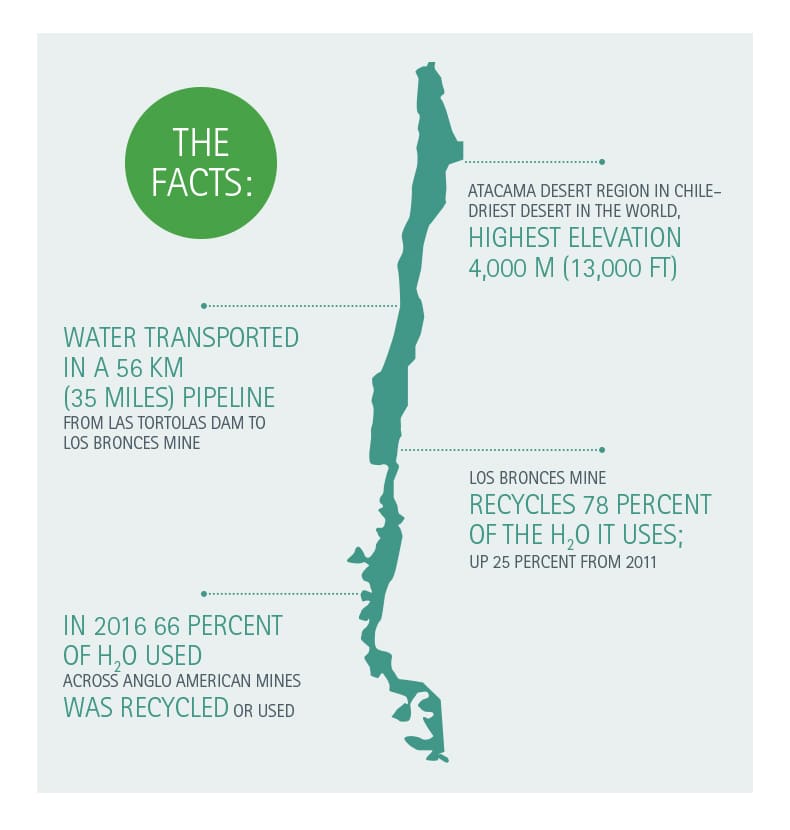
The Atacama Desert region surrounding the Los Bronces copper mine in Chile is notoriously dry and located at one of the planet’s highest altitudes. With its declining ore grades and proximity to Santiago’s growing population of 6.3 million, the mine was drawing heavily on the local water supply. To reduce this environmental impact, Anglo officials developed a novel approach to recycle vast amounts of water.

After months of planning, Anglo upgraded its water transportation system, which moves water along a 56-kilometre (35 mile) pipeline from the Las Tortolas tailings dam, using an integrated automated circuit for recirculation.

The Technology

Central to this advancement is the “Pervasive Sensing” technology Anglo developed with partner Silixa following FutureSmart Mining™’s 2015 Open Forum on water. Pervasive sensing, which is the capability to deploy large numbers of sensors, link them to communication networks and analyze the collective data, is transforming many industries. In mining, networked sensors are used for remote operation, automation, health and safety, and exploration. In this application, the sensor is a fiber-optic circuit measuring mine water flows in real time and maximizing conservation at multiple points, with the ability to monitor a region equal in size to Lower Manhattan.

The cable—running without expensive parts or power—is more cost efficient and environmentally sound than the traditional devices to gage water-stressed areas at predetermined points, supporting better process control, water conservation and, ultimately, improved metal recovery.

The Result

Now, Los Bronces recycles more than 78 percent of the water it uses, a major increase from the 25 percent it was recycling in 2011. In 2016, 66 percent of the water used across Anglo American’s mines was recycled or re-used.

Anglo’s next goal is to increase the amount of recycled water across its operations worldwide by 50 percent before 2030.

“Mining is both data-rich and process heavy. This data-rich technology is within the process realm where value can be significantly higher and the benefits exponential.” – Donovan Waller, Group Head of Technology Development, Anglo American

Last year, this technology was honored at Mines and Money in London with an Outstanding Achievement Award for the Best Use of Smart Technology for Sustainability.

With approximately three-quarters of its assets in water-stressed areas, Anglo’s freshwater consumption reduction target presents a unique opportunity to grow the SDG framework at scale.

About the Copper Alliance®

The Copper Alliance® is a network of regional copper centers and their industry-leading members. It is responsible for guiding policy and strategy and for funding international initiatives and promotional activities. Headquartered in Washington, D.C., the organization has offices in four primary regions: Europe and Africa, Asia, Latin America and North America. Copper Alliance® programs and initiatives are executed in more than 60 countries through its regional offices and country-level copper promotion centers.

About Anglo American

Anglo American plc is a diversified multinational mining firm based in Johannesburg, South Africa and London, United Kingdom, and is a major copper producer with four red metal mines in Chile.

About FutureSmart Mining™

Enabled by robust, cross-operational and stakeholder consultations, Anglo’s methodology is embedded in its FutureSmart Mining™ initiative, which applies cutting-edge technology and broad innovative thinking. This encompasses collaboration to ensure safer, more efficient and more sustainable mining while accommodating the needs of each host community.

To learn more on how Anglo American is re-imagining mining to improve people’s lives through FutureSmart Mining™, visit here.

Access To Drinking Water

January 2, 2018 by

Globally, 780 million people do not have access to clean water and with a fast-growing global population, this remains one of the most challenging development goals.

Plumbing tube is one of the oldest uses of copper and therefore plays an important role in terms of water supply. While other technologies have replaced copper in some markets, copper is a proven, safe technology for the transportation and delivery of drinking water to home and businesses.

The importance of the right materials in drinking water systems is exemplified in the unfortunate situation in Flint, Michigan, U.S.A. There, leaching of lead from old service lines is having significant, negative impacts on human health. Copper is being considered by local officials to replace the lead service lines, as copper offers significant performance and environmental benefits.

Flint is raising awareness for the need to inspect and potentially replace old water service lines that could pose health risks over time.

Meeting the challenge of a sustainable water supply

In 2013, BHP Billiton approved an investment of US$1,972 million to sustain operations at Escondida in Chile, by constructing a new 2,500 litre per second sea-water desalination facility.

The aim of the project was to ensure continued water supply to Escondida, as water use increased with the completion of the 152,000 tonnes per day OGP1 copper concentrator. Construction of the new desalination facility commenced in July 2013 and includes the development of two pipelines, four high-pressure pump stations, a reservoir at the mine site and high voltage infrastructure to support the system. The new facility opened in 2017 and won “Industrial Desalination Plant of the Year” by Global Water Intelligence.

Securing a sustainable water supply in the Atacama Desert is a major priority for all Chilean copper producers, so the approval of the Escondida Water Supply (EWS) project is a significant milestone. The new desalination facility will minimise reliance on the region’s aquifers, which will help to meet environmental commitments.

More information on EWS can be found here.

Source: UN Water, 2013 World Water Day, International Year of Water Cooperation

  • Page 1
  • Page 2
  • Go to Next Page »

Copyright © 2026 · Genesis Sample on Genesis Framework · WordPress · Log in